Valueerror: the 'type' Property of Scatter Is Read-only
🌟 Introducing plotly.py 3.0.0 🌟
TLDR; You lot can download and install plotly.py iii.0.0 today with pip install plotly (or pip install plotly --upgrade if you've installed the Plotly Python library in the by).
Terminal October, at our New York City Dash Workshops, an attendee showed the states something really special. Jon Mease (@jonmmease), a data scientist and software developer from the Johns Hopkins Practical Physics Laboratory, had spent three months working on a fork of plotly.py, our open up source Python graphing library:
I've spent years working in scientific and engineering science domains and I'm really excited nigh the benefits of bringing the all-time of the Python open data science ecosystem to these areas.
Data visualization is a critical component of analysis in these domains, and even though there are literally dozens of libraries in Python'south Visualization Landscape, I couldn't find one that supported the full gear up of features that I need (or at least that I want 😃). These include: Support for a broad range of plot types covering statistical, 3D, and geographic use cases; efficient GPU acceleration to handle realistically large data sets; offline consign of loftier-quality static images; two-way interactivity in the Jupyter Notebook; and stand-alone dashboarding support.
And then I decided to start with the technology that I felt was the closest (plotly.js with plotly.py and Dash), and try my hand at filling in some of the gaps. As you'll see in this postal service, I got a chip carried away 😌
— Jon
So Jon dug deep into plotly.js and started creating his own Pythonic interface to the library. Information technology started with typeahead support and grew and grew to include first class Jupyter widgets, fast typed arrays, deep effigy validation, offline static image consign, and more. Now, one year subsequently his first commit and nine months after our workshops, we've integrated Jon'due south fork into the official plotly.py library and are excited to denote our biggest release still: plotly.py 3.0.0 🎉
Eager to get started? Download and install plotly.py 3.0.0 today with pip install plotly (or pip install plotly --upgrade if you've installed the Plotly Python library in the past).
Starting time Grade Jupyter Widget Support
3.0.0 introduces a new Jupyter widget class: plotly.graph_objs.FigureWidget
FigureWidget has the same call signature as our existing Figure, and it's fabricated specifically for Jupyter Notebook and JupyterLab environments.
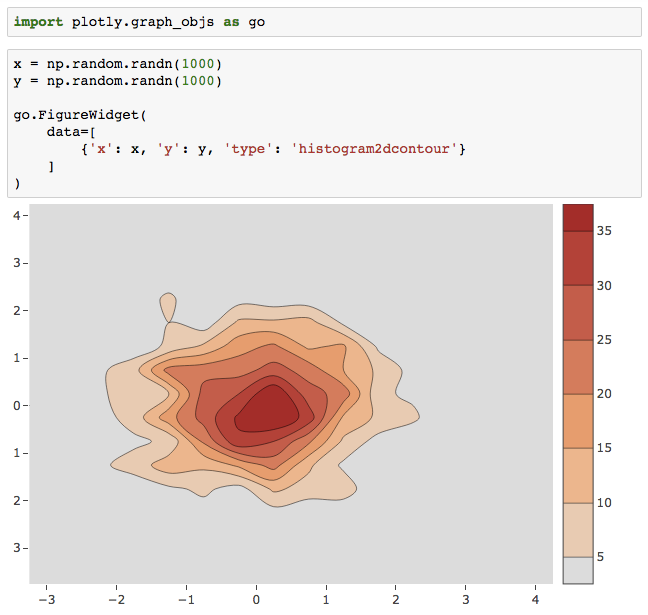
plotly.offline.iplot are no longer necessary.This figure widget is synced up with the plotly.js JavaScript figure object, so y'all can access all of the properties of the effigy, including the dynamic default properties that were previously merely available in the JavaScript context.

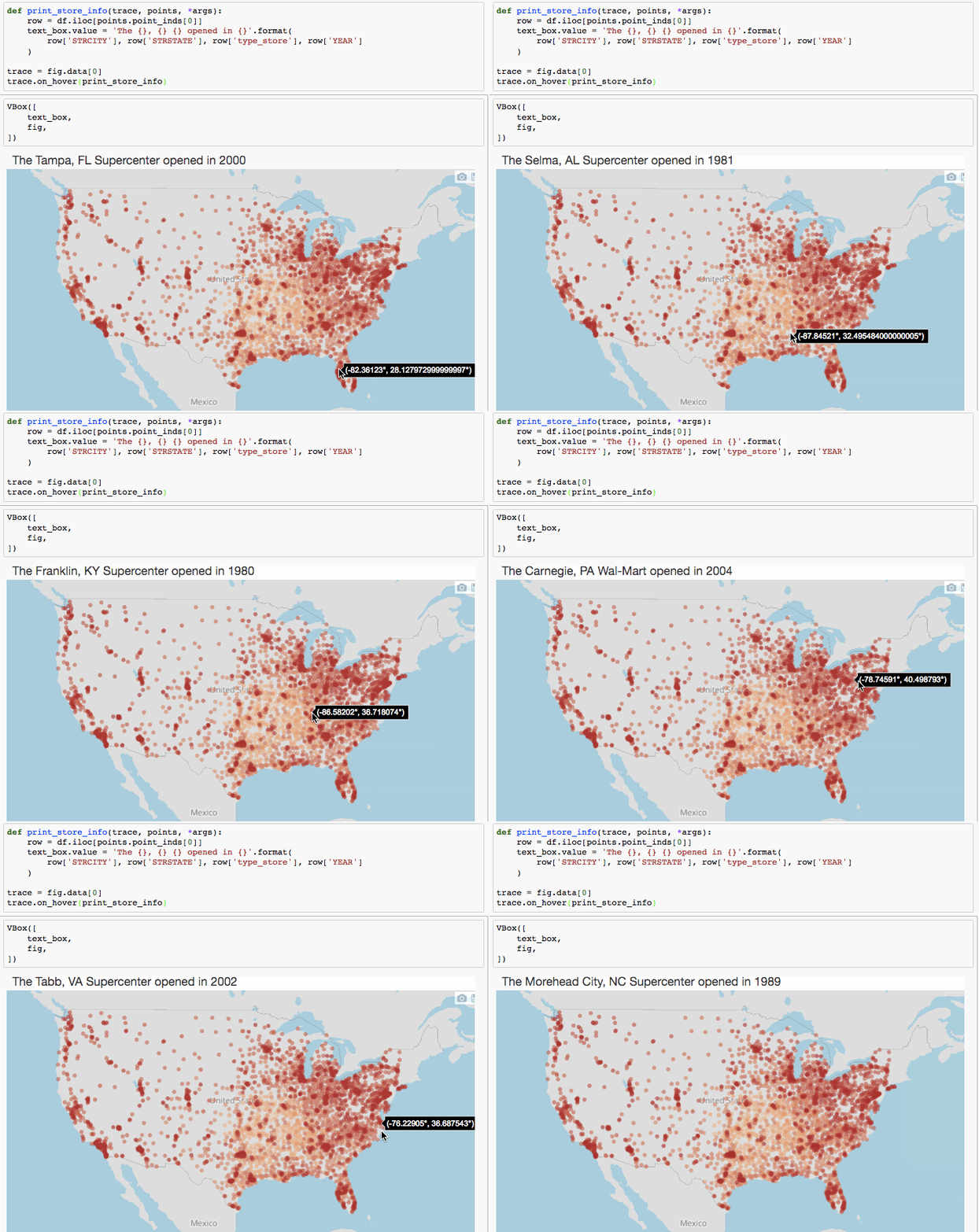
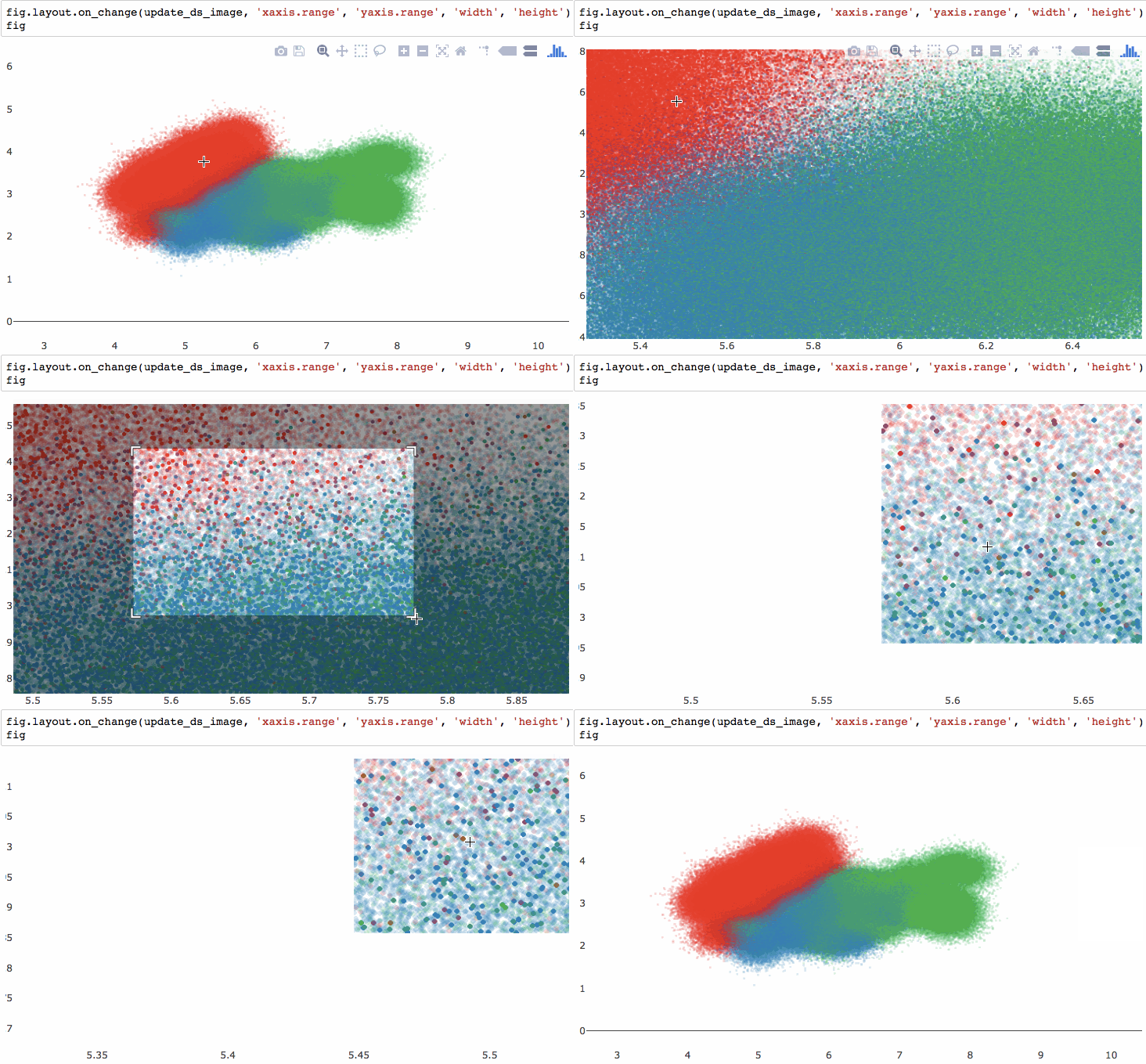
This widget is compatible with the rest of the widget framework and has upshot listeners for hovering, clicking, and selecting points and zooming into regions.
An Imperative Alternative
plotly.js graphs are declarative. This means that every aspect of the charts (the colors of the bars, the axes grid lines, the position of annotations) are completely described through a prepare of attributes. This fix of attributes is the "Plotly JSON Chart Schema," and information technology describes every aspect of over 33 nautical chart types (and counting)!
Our interface to this library has ever been declarative. You lot depict what the graph should await like, not how to draw it.
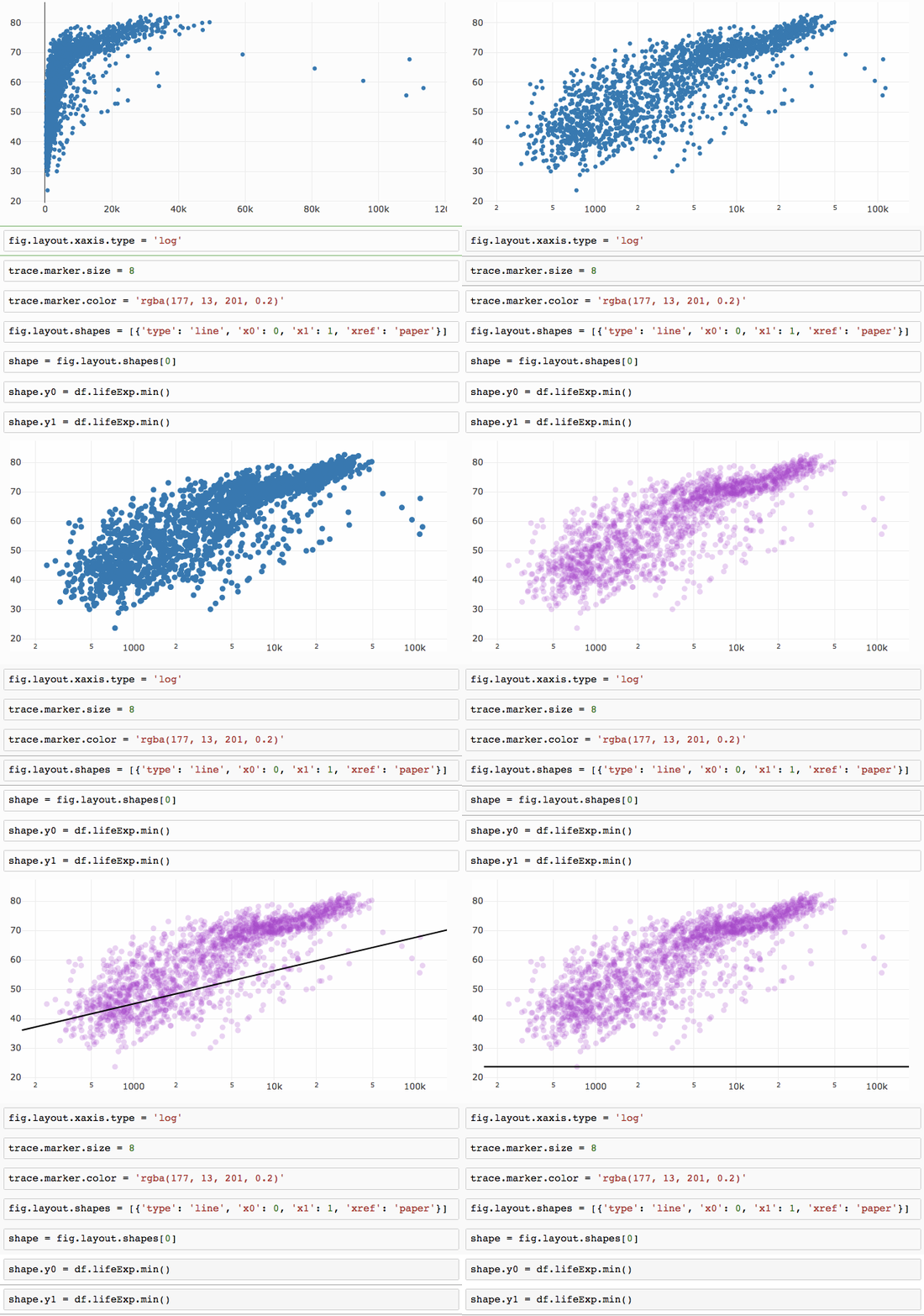
plotly 3.0.0 introduces a set of imperative methods for manipulating and exploring the figure in Jupyter's interactive computing environments. It'due south easier than always to traverse the effigy structure and dispense the graph. The imperative methods are 1-to-one with the declarative attributes, and then it's easy to switch between describing your graph entirely upfront (declarative method) and editing information technology on-the-fly in Jupyter (imperative method).
Tab-Complete Support
With plotly.py, it'due south easier than always to observe the attributes of your graphs without leaving the notebook. plotly.py generates rich Python classes from the chart schema with neat docstrings and perfect tab-consummate support.
For whatever instantiated figure, yous can traverse through all attributes of the effigy and view their full descriptions:
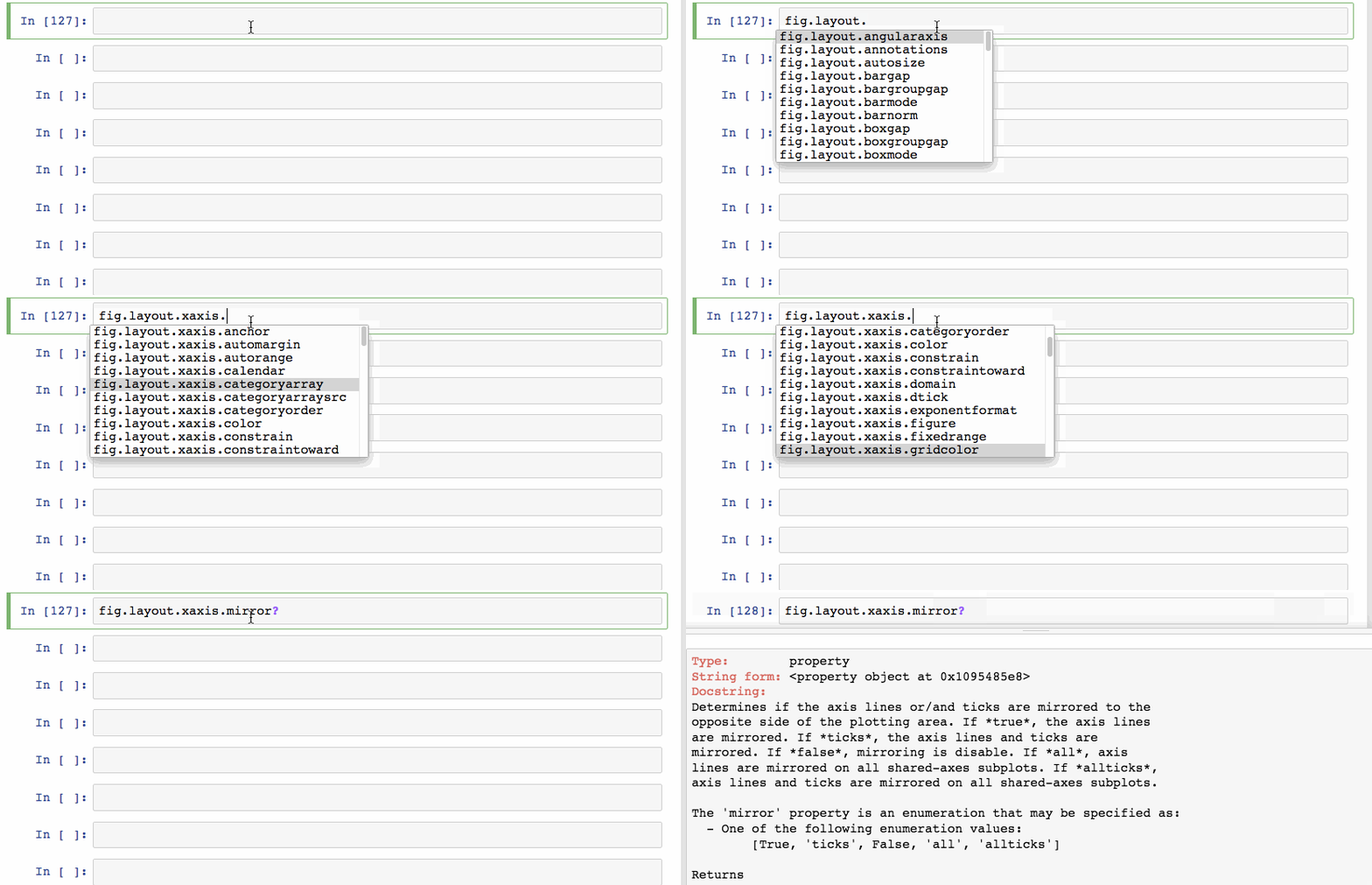
And the docstrings are cute. They're pulled straight from the plotly.js schema so when plotly.js updates the underlying source code, plotly.py will automatically get the new doc strings.
          >>> fig.layout.barmode?
Determines how confined at the same location coordinate are
displayed on the graph. With *stack*, the confined are stacked on
superlative of one another With *relative*, the bars are stacked on superlative
of ane another, with negative values below the axis, positive
values above With *group*, the bars are plotted next to one
some other centered around the shared location. With *overlay*,
the confined are plotted over one some other, you might need to an
*opacity* to meet multiple bars.The 'barmode' property is an enumeration that may be specified equally:
              - Ane of the following enumeration values:
              ['stack', 'group', 'overlay', 'relative']
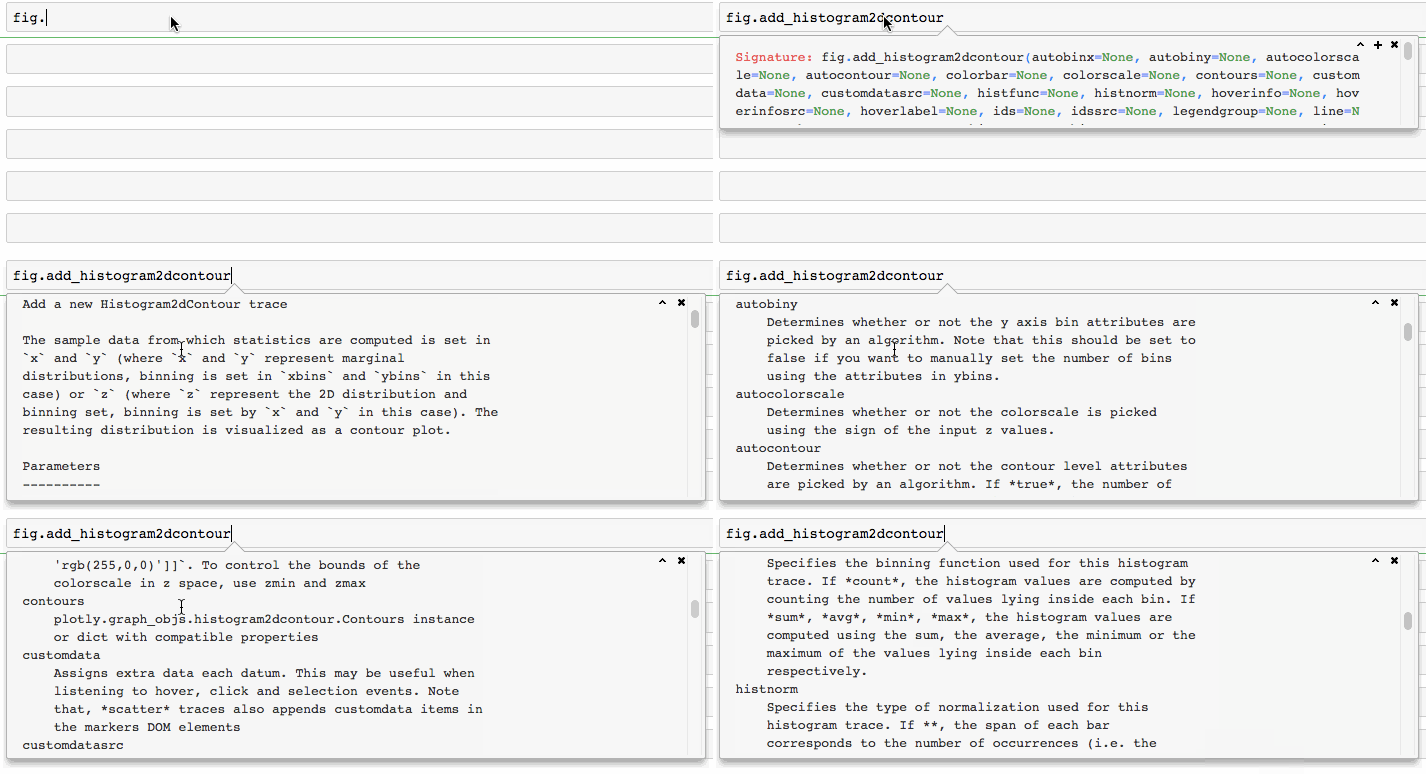
add_*` methods of a figure. In Jupyter, blazon shift+tab to pull up the inline-documentation and shift+tab a second time to expand it.Typeahead too works for the plotly.graph_objs, the pythonic wrappers effectually each of the chart types and groups of nested attributes.
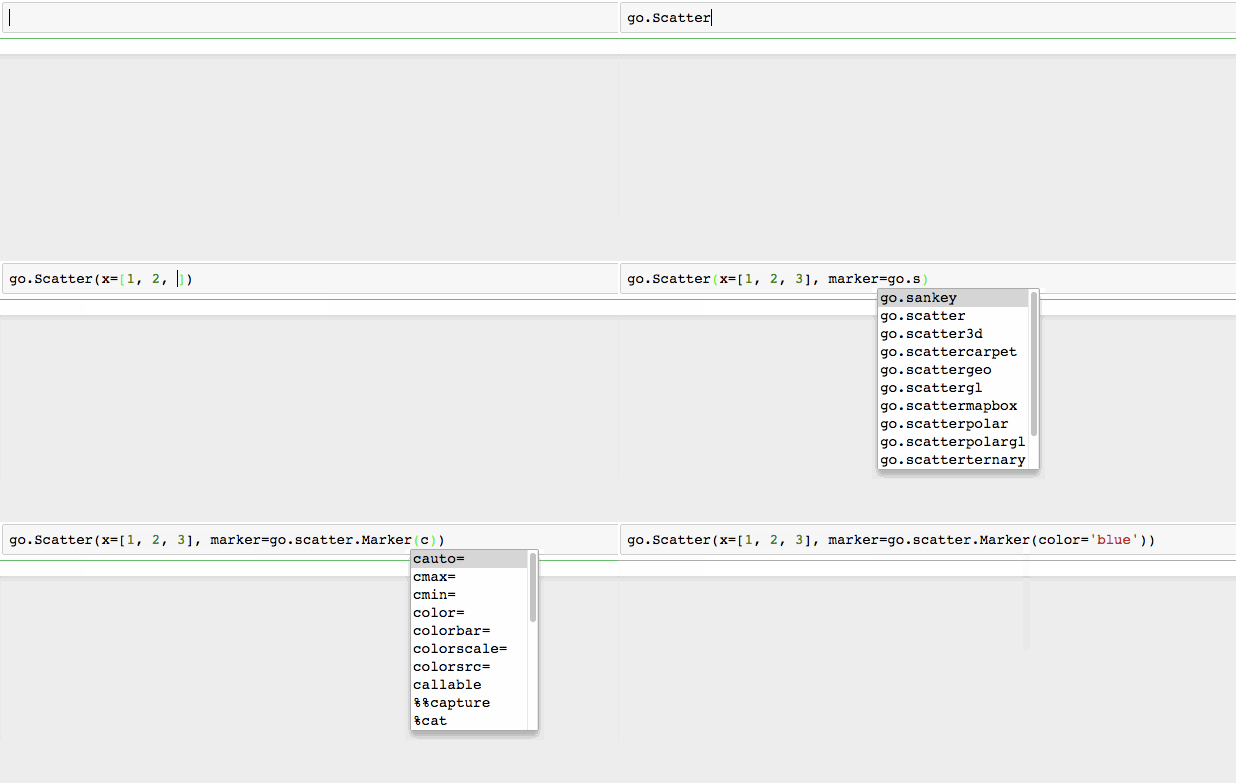
Calling help on these objects displays rich descriptions, all of the bachelor keyword arguments, and descriptions of each statement. Consummate and explicit.
          >>> go.Carpet?          Init signature: go.Carpet(
            a=None, a0=None, aaxis=None, asrc=None,
            b=None, b0=None, baxis=None, bsrc=None,
            carpet=None, cheaterslope=None, color=None,
            customdata=None, customdatasrc=None,
            da=None, db=None, font=None, hoverinfo=None,
            hoverinfosrc=None, hoverlabel=None,
            ids=None, idssrc=None, legendgroup=None,
            proper name=None, opacity=None, selectedpoints=None,
            showlegend=None, stream=None,
            uid=None, visible=None, x=None, xaxis=None, xsrc=None,
            y=None, yaxis=None, ysrc=None)          Construct a new Carpeting object          The data describing carpet centrality layout is prepare in `y` and
(optionally) also `ten`. If but `y` is present, `x` the plot is
interpreted as a cheater plot and is filled in using the `y`
values. `ten` and `y` may either exist second arrays matching with each
dimension matching that of `a` and `b`, or they may exist 1D
arrays with total length equal to that of `a` and `b`.          Parameters
----------
a
An assortment containing values of the outset parameter value          a0
Alternate to `a`. Builds a linear space of a
coordinates. Employ with `da` where `a0` is the starting
coordinate and `da` the step.          aaxis
plotly.graph_objs.carpet.Aaxis instance or dict with
compatible properties          b
A two dimensional array of y coordinates at each carpet
point.          b0
Alternate to `b`. Builds a linear space of a
coordinates. Use with `db` where `b0` is the starting
coordinate and `db` the stride.          baxis
plotly.graph_objs.carpet.Baxis instance or dict with
compatible backdrop          rug
An identifier for this carpet, so that `scattercarpet`
and `scattercontour` traces can specify a carpet plot
on which they lie          cheaterslope
The shift applied to each successive row of data in
creating a cheater plot. Only used if `ten` is been
ommitted.          color
Sets default for all colors associated with this axis
all at once: line, font, tick, and grid colors. Filigree
color is lightened by blending this with the plot
background Individual pieces can override this.          [...]
These nice tab-complete docstrings as well work with traditional code editors like PyCharm:
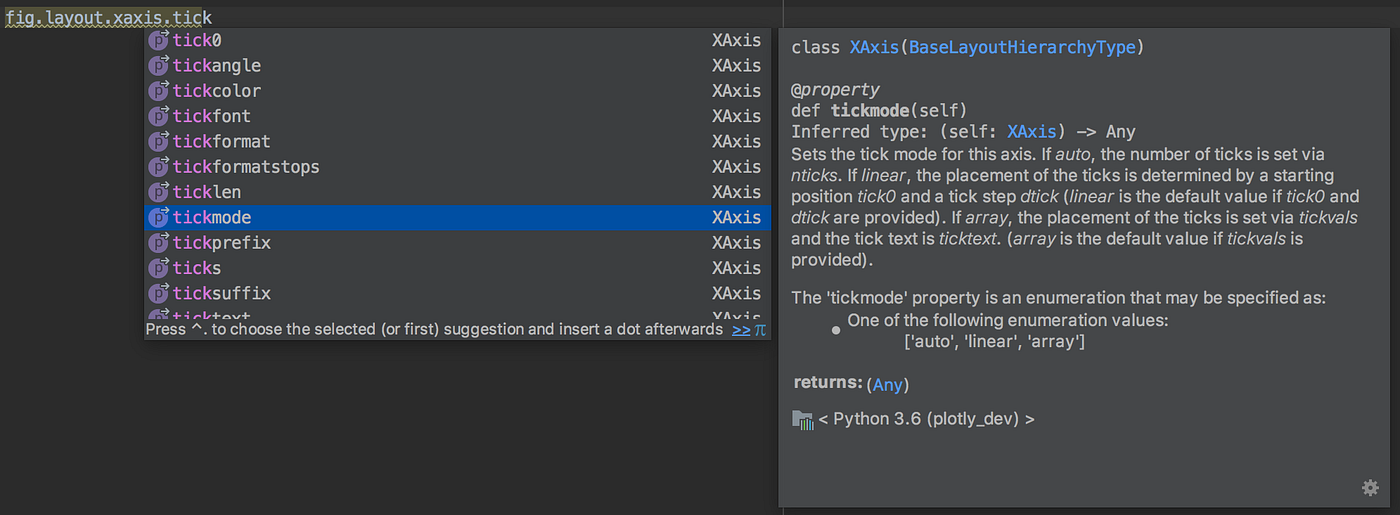
I've been spoiled over the years by the level of auto-completion and inline documentation that powerful IDEs like IntelliJ and Visual Studio provide for statically typed languages like Java and C#. My goal was to recreate this experience when working with the plotly.py object hierarchy. After several iterations on the design of the generated classes and their associated docstrings, I call up I've gotten pretty shut.
Lawmaking generation can be a lot of fun when you take a conspicuously defined schema!
— Jon
Deep Validation and Helpful Error Letters
The plotly.js chart schema provides strict types for each attribute. There are 14 information types and plotly.py at present provides strict blazon validators and type-specific exceptions for each of them.
The validators are strict and helpful. For example, they'll raise errors if your strings aren't valid CSS color strings:
          >>> get.scatter.Marking(color='fuschia')          Invalid value of blazon 'builtins.str' received for the 'color' property of scatter.marking
            Received value: 'fuschia'          The 'color' property is a color and may be specified as:
            - A hex string (due east.m. '#ff0000')
            - An rgb/rgba string (e.thou. 'rgb(255,0,0)')
            - An hsl/hsla string (eastward.one thousand. 'hsl(0,100%,50%)')
            - An hsv/hsva cord (e.g. 'hsv(0,100%,100%)')
            - A named CSS color:
            aliceblue, antiquewhite, aqua, aquamarine, azure,
            biscuit, bisque, black, blanchedalmond, blue,
            blueviolet, brown, burlywood, cadetblue,
            chartreuse, chocolate, coral, cornflowerblue,
            cornsilk, crimson, cyan, darkblue, darkcyan,
            darkgoldenrod, darkgray, darkgrey, darkgreen,
            darkkhaki, darkmagenta, darkolivegreen, darkorange,
            darkorchid, darkred, darksalmon, darkseagreen,
            darkslateblue, darkslategray, darkslategrey,
            darkturquoise, darkviolet, deeppink, deepskyblue,
            dimgray, dimgrey, dodgerblue, firebrick,
            floralwhite, forestgreen, fuchsia, gainsboro,
            ghostwhite, gold, goldenrod, grayness, gray, light-green,
            greenyellow, honeydew, hotpink, indianred, indigo,
            ivory, khaki, lavender, lavenderblush, lawngreen,
            lemonchiffon, lightblue, lightcoral, lightcyan,
            lightgoldenrodyellow, lightgray, lightgrey,
            lightgreen, lightpink, lightsalmon, lightseagreen,
            lightskyblue, lightslategray, lightslategrey,
            lightsteelblue, lightyellow, lime, limegreen,
            linen, magenta, maroon, mediumaquamarine,
            mediumblue, mediumorchid, mediumpurple,
            mediumseagreen, mediumslateblue, mediumspringgreen,
            mediumturquoise, mediumvioletred, midnightblue,
            mintcream, mistyrose, moccasin, navajowhite, navy,
            oldlace, olive, olivedrab, orangish, orangered,
            orchid, palegoldenrod, palegreen, paleturquoise,
            palevioletred, papayawhip, peachpuff, peru, pink,
            plum, powderblue, purple, crimson, rosybrown,
            royalblue, saddlebrown, salmon, sandybrown,
            seagreen, seashell, sienna, silver, skyblue,
            slateblue, slategray, slategrey, snowfall, springgreen,
            steelblue, tan, teal, thistle, love apple, turquoise,
            violet, wheat, white, whitesmoke, xanthous,
            yellowgreen
            - A number that will exist interpreted every bit a color
            according to scatter.mark.colorscale
            - A list or array of any of the above
Or if a number is exterior of the valid range:
>>> go.scatter.Marking(size=-1) ValueError:
Invalid value of type 'builtins.int' received for the 'size' property of scatter.marker
Received value: -oneThe 'size' belongings is a number and may exist specified equally:
- An int or float in the interval [0, inf]
- A tuple, list, or one-dimensional numpy array of the above
Or if the cord isn't i of the enumerated values:
          >>> go.Besprinkle(mode='mark')          Invalid value of type 'builtins.str' received for the 'mode' property of besprinkle
            Received value: 'marker'          The 'style' property is a flaglist and may be specified
            as a cord containing:
            - Any combination of ['lines', 'markers', 'text'] joined with '+' characters
            (e.g. 'lines+markers')
            OR exactly ane of ['none'] (e.chiliad. 'none')
Functioning Improvements
Plotting large data interactively is now faster than ever:
- plotly.py effigy specifications are now serialized and transferred to plotly.js using the Widget Message Protocol over the Jupyter Comms infrastructure.
- Thanks to the great work of the ipywidgets team, Python numpy arrays are now transferred into JavaScript TypedArrays without any intermediate UTF-eight encoding. We'd especially similar to thank Maarten Breddels, Sylvain Corlay, and Jason Grout for laying very thoughtful foundations for this. We're continuing on the shoulders of giants!
- plotly.js provides direct back up for TypedArrays (added in v0.35.0) and information technology provides a super fast WebGL pathway for many trace types.
Plotting 1M points in Jupyter used to take 35 seconds. Now it takes merely three. And the result is a responsive, completely interactive chart. 🚀
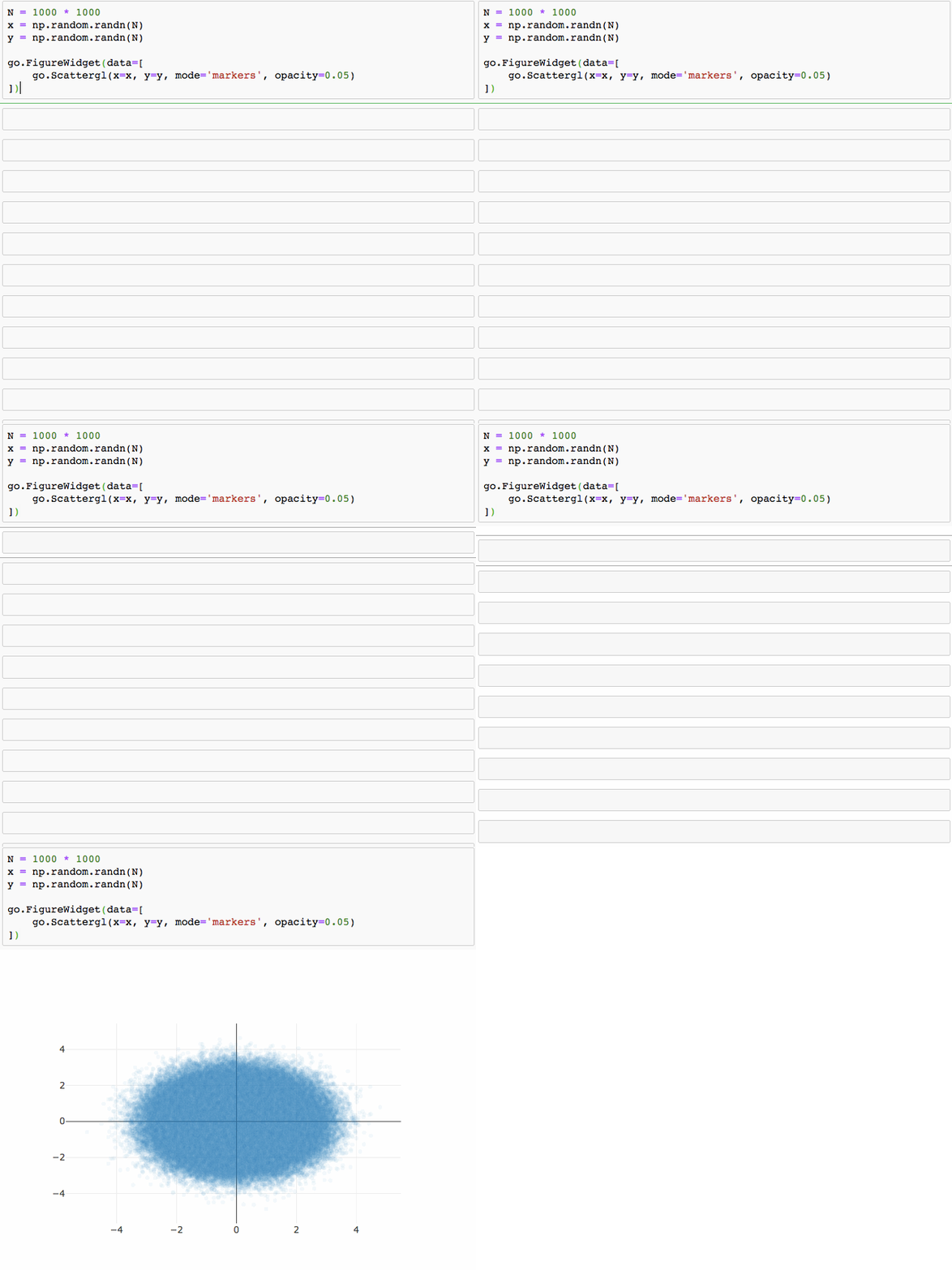
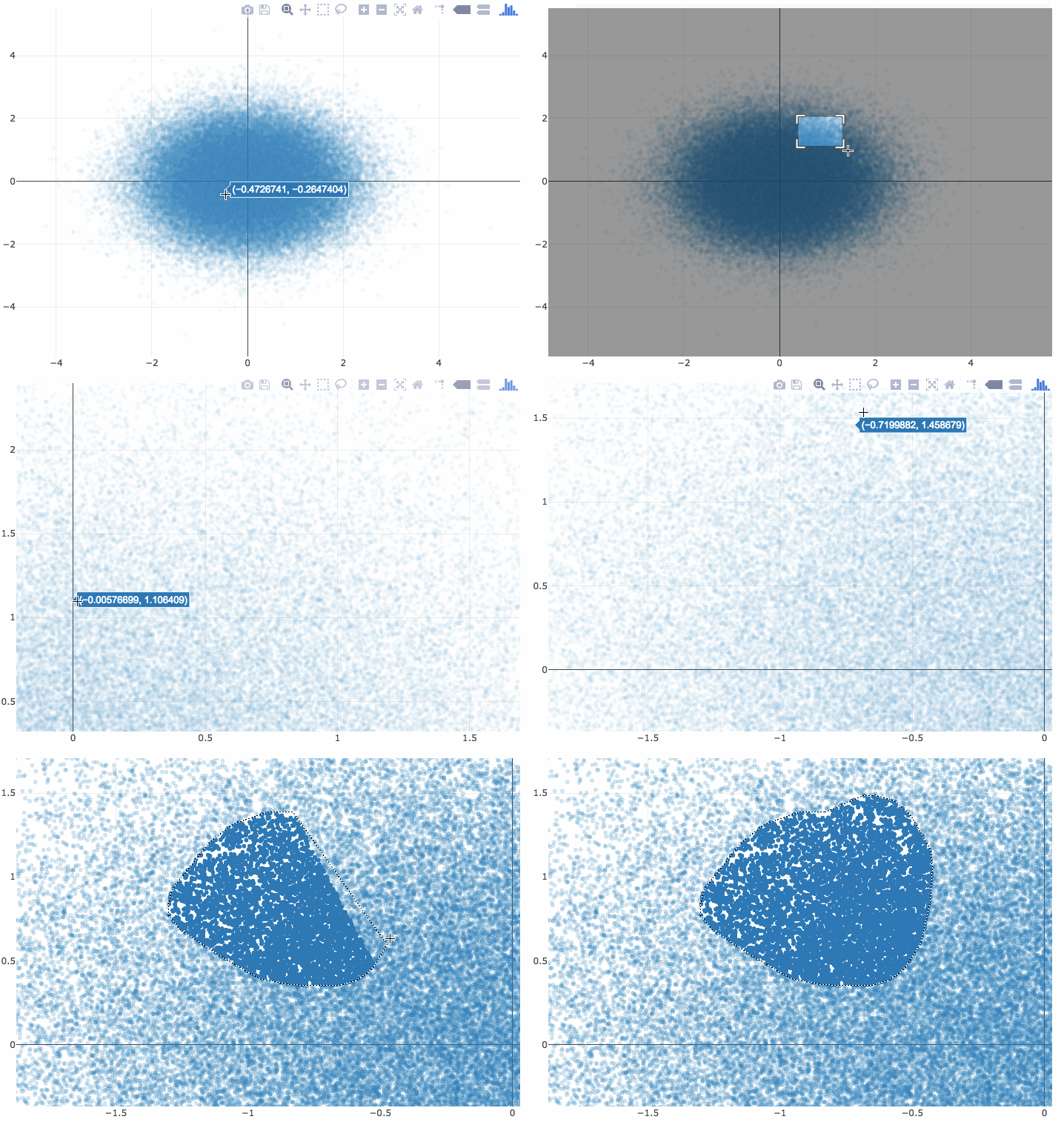
I've worked with a lot of data visualization libraries over the years, both proprietary and open source, and I don't know of any that can both display a 1000000 points this quickly, and support zooming, panning, and selection at interactive speed.
(And now that I've I said this, I wait forward to learning about some in the Hacker News discussion of this mail 😉)
— Jon
Context Manager for Animations
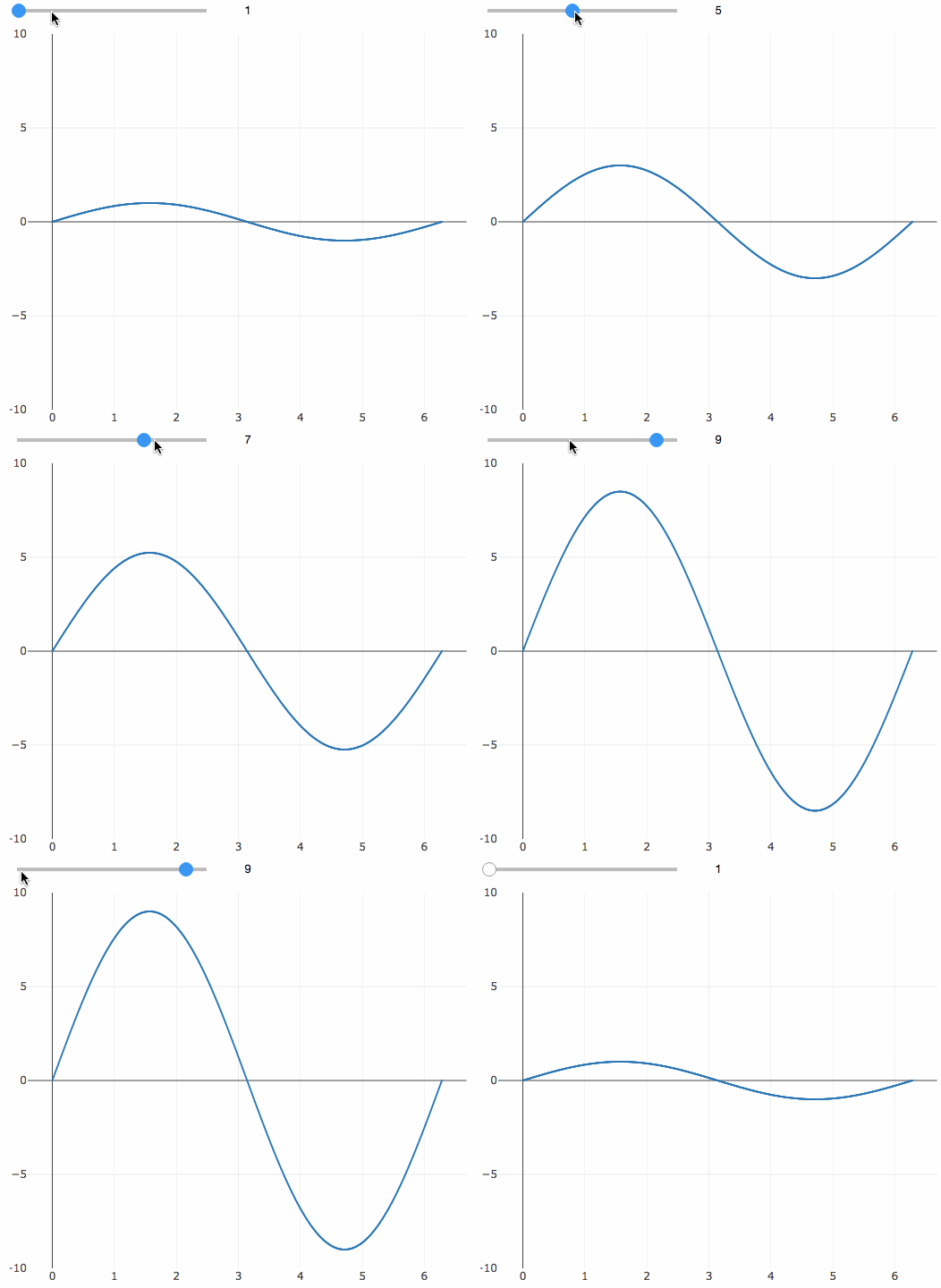
Two years ago, we introduced an animation interface in plotly.js. Previously, it's been possible to create animations in plotly.py by defining a set of transitions upwardly-front (frames). Now, in plotly.py 3.0.0, you tin define the animation transitions on-the-fly with a new ContextManager.
For example, here'south how to animate polish transitions of a line chart with ipywidgets.IntSlider.
          def animate_figure(change):
            with fig.batch_animate(duration=500):
            trace.y = np.sin(ten) * modify['new']          slider.observe(animate_figure, names='value')
JupyterLab Back up
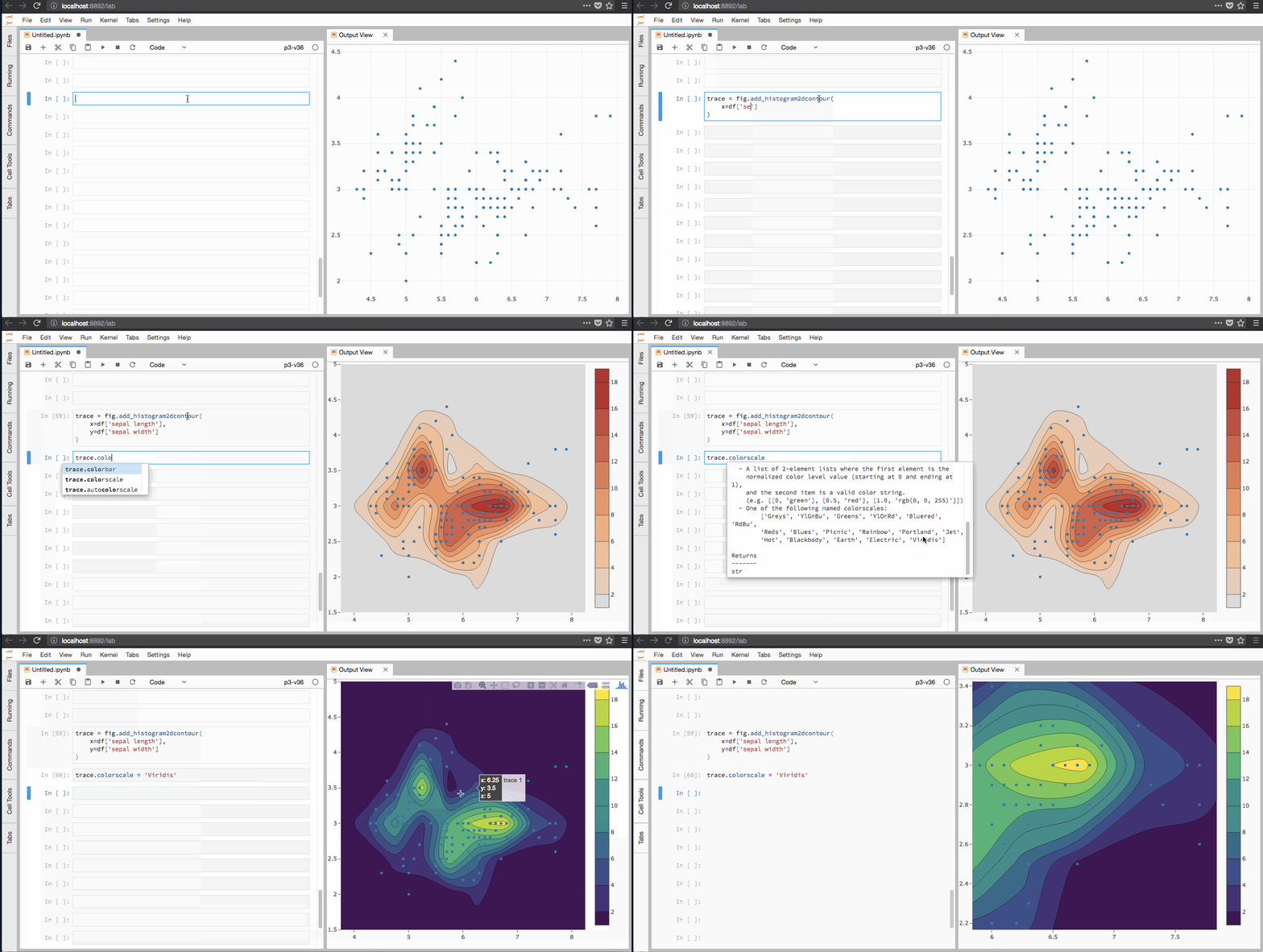
plotly.py iii.0.0's FigureWidget is completely compatible with the new JupyterLab surround.
Static Image Export
plotly.js graphs are rendered with JavaScript in a browser context. In guild to create static images of these charts, without opening a browser, we needed a manner to return the graphs in some type of headless browser.
In May, nosotros open-sourced Orca, a command-line application that generates static images of plotly graphs. Orca has been used in production at Plotly for about nine months, creating images for tens of millions of charts.
Orca is the engineering science for creating static images of Plotly graphs. We're working on bundling Orca as an optional dependency in the official plotly.py package. For at present, follow the instructions in the Orca repository.
Backwards Compatibility
At Plotly, nosotros take backwards compatibility pretty seriously.
Over the last five years of developing plotly.js, we've published over 100 releases, all without a single breaking change to the API.
plotly.py graphs are rendered with plotly.js, so this release does not change the way that your graphs are rendered. The attributes of the graphs remain one-to-one with plotly.js, and so the declarative interface to the figures (data, layout, and all of the nested properties within) has not changed either.
What has changed is the structure of the Python classes that wrap these attributes: plotly.graph_objs ("go"). We're at present placing our nested backdrop, similar become.Marker, in a namespace underneath their parent attribute. That is, get.Marker is now attainable as get.scatter.Marking or go.bar.Marker or whatever trace information technology is nested within. By providing unique objects nether the parent-trace namespace, we tin can provide better validation (the properties for a mark object within a scatter trace may exist different than the backdrop of a marker object inside a bar trace). Although deprecated, the previous objects are still supported, they just won't provide the same level of validation as our new objects.
Of course, yous're not required to employ these college level objects. Yous can nevertheless write your graphs as straight dictionaries and lists. Or, you can mix-and-lucifer. Here are four equivalent representations of a trace:
          # New method
go.Scatter(
            x=[ane, 2, three],
            y=[iii, i, two],
            marker=go.scatter.Marker(color='blue')
)          # Old method - deprecated go.Marker object
go.Scatter(
            x=[1, two, 3],
            y=[three, 1, two],
            mark=go.Marker(color='blue')
)          # Mix-and-lucifer dicts and lists
become.Scatter(
            x=[1, 2, 3],
            y=[3, 1, 2],
            marker={'colour': 'blue'}
)          # Or use primitive types all the way downwards
{
            'x': [i, 2, 3],
            'y': [3, i, 2],
            'type': 'scatter',
            'marker': {'color': 'blue'}
}
We take a more detailed certificate in our plotly 3.0.0 migration guide. Please let us know if nosotros've missed anything in a GitHub event!
Looking Forrard and Further Resources
- iii.0.0 is a major release which means in that location are some breaking changes. Get alee of the release by trying out our release candidate with our migration guide. Questions, problems? Delight make an effect 🙇
- Jon volition be speaking most
v3.0.0at SciPy 2018 in Austin. If you're at that place, come say hello! 👋 - Jon also wrote a paper for SciPy 2018 outlining these features and, more technically, the underlying architecture of the code. Bank check out the SciPy abstract online.
- Can't make information technology to SciPy? Jon will be giving a webinar about plotly.py three.0.0 on July 25. Sign up here.
- Dash, our open source Python library for standalone analytic apps, uses
plotly.pyand is uniform withplotly.py v3.0.0. - The underlying graphing library that powers plotly.py (and other libraries like Dash) is plotly.js. This library is in agile evolution. View our latest releases on GitHub.
- More than of an R person? Carson has been making a lot of fantastic improvements in the Plotly R library lately.
- Follow our latest work with Twitter: @plotlygraphs
- Much of our open up source work is funded directly from organizations that accept budgets for software. Many thank you to everyone that has supported u.s. so far ❤️. Interested in sponsoring a particular characteristic? Delight get in touch.
- Plotly, Inc. also provides public, private, and on-premise platforms for publishing graphs, datasets, and interactive Dash applications. More than than half of our revenue straight funds open source libraries like these. Learn more about our commercial products.
Much love —
Squad Plotly
Source: https://medium.com/plotly/introducing-plotly-py-3-0-0-7bb1333f69c6
0 Response to "Valueerror: the 'type' Property of Scatter Is Read-only"
Post a Comment